





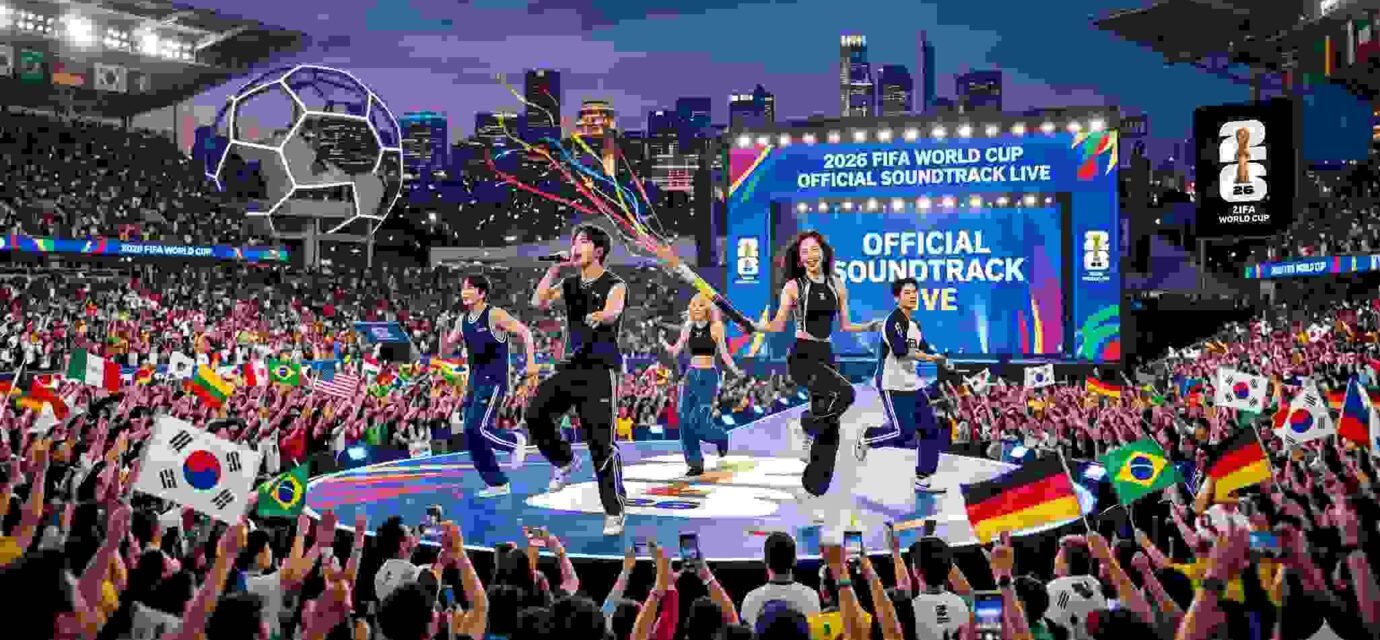
Beyond ‘Dreamers’: K-Pop’s Soundtrack for the 2026 FIFA World Cup
The Evolution of Music in FIFA World Cup History
Music has been an integral part of the FIFA World Cup experience, serving as a bridge between cultures and enhancing the emotional resonance of the tournament. From its inception, the FIFA World Cup has evolved to include official songs that encapsulate the fervor and spirit of the event. The tradition began as early as the 1962 World Cup in Chile, where the anthem “El Rock del Mundial” captured the vibrancy of the competition. As the years progressed, notable anthems such as “We Are the World” for the 1986 tournament and Shakira’s “Waka Waka (This Time for Africa)” in 2010 highlighted the growing influence of global music on the World Cup stage.
These songs have not only served as rallying cries for fans but have also played a crucial role in shaping the tournament’s atmosphere. The desire to resonate with diverse audiences has led to collaborations between artists from various genres and cultural backgrounds. This transformation has encouraged the inclusion of different musical styles, reflecting the host nation’s culture while enhancing the tournament’s global reach.
As we entered the 21st century, the emergence of genres such as K-pop has introduced a new dimension to World Cup music. With its infectious rhythms and visually captivating performances, K-pop has attracted a massive global following, presenting opportunities for cross-cultural collaboration. The participation of K-pop artists at the World Cup signifies a shift towards a more inclusive representation of music, which appeals to a broader demographic than in previous decades. This evolution not only highlights changing musical tastes but also underscores the FIFA World Cup’s ability to adapt and embrace new cultural phenomena.
K-Pop’s Growing Influence on the World Cup Stage
The influence of K-pop on global culture has steadily gained momentum over the past decade, with its impact now extending to significant international events such as the FIFA World Cup. At the forefront of this phenomenon is the renowned boy band BTS, whose song “Dreamers” was featured prominently during the 2022 Qatar World Cup. This song not only served as a major theme for the tournament but also showcased the unique energy and artistry that K-pop brings to global sports.
The reception of “Dreamers” was overwhelmingly positive, resonating with audiences beyond just fans of K-pop. It encapsulated themes of hope and unity—principles that the World Cup aims to promote worldwide. BTS’s participation in this high-profile event exemplified the merging of music and sports, demonstrating how K-pop can engage diverse audiences and foster cultural exchange during monumental occasions. Hence, the song’s success paved the way for other K-pop artists, indicating a shift in how music genres traditionally positioned in specific markets can transcend boundaries.
Looking ahead to the 2026 FIFA World Cup, anticipation is building around the potential contributions from various K-pop artists. Major names are already reportedly in discussions to collaborate on the official soundtrack, potentially creating an album that not only represents the tournament but also the rich tapestry of K-pop’s evolving narrative. These anticipated collaborations highlight the genre’s ability to connect with global audiences while enhancing the celebratory atmosphere of a global event.
The collaborative spirit of K-pop artists is characterized by their willingness to bridge genres, cultures, and fan bases. As the 2026 World Cup draws nearer, it is clear that K-pop’s presence on this grand stage is more than a mere musical trend; it is a testament to the genre’s burgeoning role in global cultural conversations, further inspiring collaboration among artists from different musical backgrounds.
The 2026 FIFA World Cup stands as a monumental event in the landscape of global sports, and K-Pop artists are contributing their unique sounds to enhance its festivities. Among the proposed tracks, “Goals” by Lisa of Blackpink emerges as a bold anthem celebrating ambition and teamwork. The song embodies the spirit of striving for victory, reflecting both personal aspirations and the collective effort of athletes battling for glory on the world stage. With its infectious beat and powerful lyrics, this track resonates with fans and athletes alike, making it a fitting tribute to the tournament.
Another notable entry is “Dream With Us” by popular girl group TWICE. This composition goes beyond mere sports and taps into the essence of dreams and unity, encouraging listeners to believe in their potential. It captures the emotional journey of players and fans as they rally behind their teams, embodying the hope and passion associated with the World Cup. The vibrant melodies and uplifting harmonies present a sense of camaraderie, which is vital in moments of competition.
Additionally, the collaboration “Watch It, Feel It” featuring Dynamic Duo and Woodz follows suit by combining elements of hip-hop with pop sensibilities, creating an energetic soundscape. This song emphasizes the excitement and exhilaration of both playing and watching football, urging listeners to engage fully with the spectacle of the tournament. The fusion of genres in this track reflects the diverse cultures participating in the World Cup, promoting a sense of global festivity and inclusion.
These K-Pop songs play an essential role in not only celebrating the athletes and the competition but also in uniting fans across nations. Their themes of perseverance, unity, and celebration encapsulate the spirit of the FIFA World Cup, making them invaluable additions to the tournament.
The Cultural Impact of K-Pop Anthems on Global Audiences
K-Pop has transcended its South Korean origins to emerge as a global phenomenon, significantly influencing international audiences. As the 2026 FIFA World Cup approaches, K-Pop anthems are poised to play a pivotal role in shaping the cultural landscape of this monumental event. These catchy tunes and vibrant performances not only serve as entertainment but also foster a sense of community among fans worldwide.
One of the key aspects of K-Pop music is its ability to connect people from diverse backgrounds, bridging cultural gaps through universal themes of passion, resilience, and triumph. The use of visually stunning music videos, coupled with multilingual lyrics, allows K-Pop to resonate with audiences regardless of language barriers. In a sporting event like the World Cup, where nations converge, K-Pop anthems act as a unifying force, encouraging collaboration and interaction among fans.
Moreover, K-Pop has a significant potential for cultural exchange, as its popularity continues to rise on international stages. The fusion of various musical styles, including hip-hop, EDM, and traditional Korean elements, captivates diverse demographics, inviting appreciation and understanding of Korean culture. This cultural infusion not only enhances the World Cup experience but also encourages fans to explore South Korean traditions, fashion, and food.
Looking ahead, the influence of K-Pop in sporting events suggests a growing integration of pop culture and athleticism, fostering a unique atmosphere of celebration. As K-Pop acts continue to feature prominently at international events, their impact on global pop culture will only intensify, solidifying the genre’s position as a formidable player on the world stage. In this evolving landscape, K-Pop anthems will undoubtedly remain a significant part of the soundtrack to the 2026 FIFA World Cup, enriching the collective experience of fans around the globe.



115 Colemont Court
4073 Riverside Drive